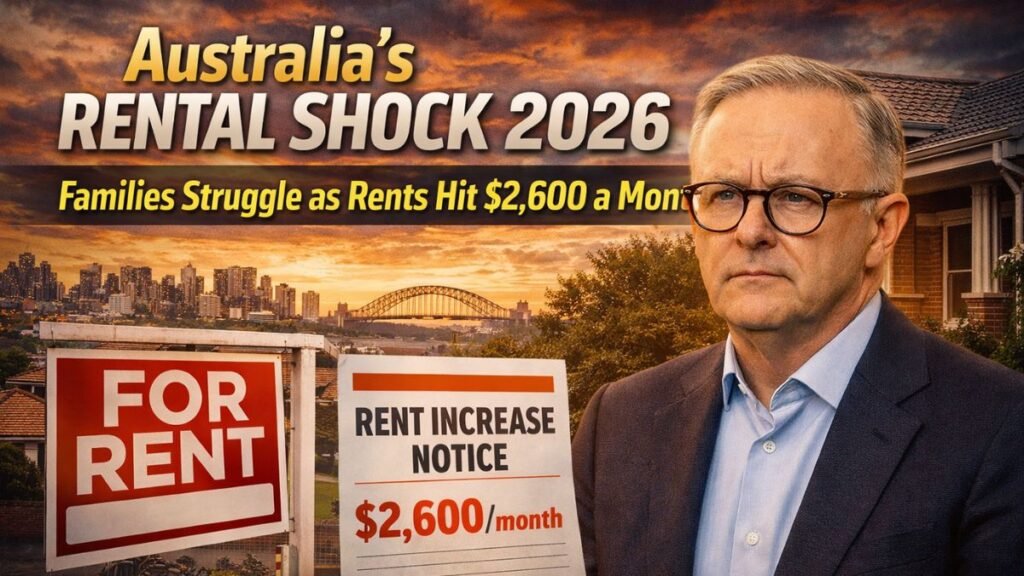
Australia’s housing crisis has reached a critical point in 2026, with average rents in major cities nearing $2,600 per month. For many families, this surge has turned financial stability into a daily struggle.
Just a few years ago, many households believed they had secured affordable living arrangements. Today, that sense of security has disappeared. Families with steady incomes are now being forced to relocate, downsize, or reconsider their future in the country altogether.
Stories like these are becoming increasingly common as rising rents, limited housing supply, and stagnant wages combine to create a challenging environment for renters.
Why Are Rents So High in 2026?
Several factors are driving the sharp increase in rental prices across Australia’s major cities. The issue is not caused by a single factor but rather a combination of long-term structural challenges.
Key Drivers Behind the Surge:
- Severe housing shortages in urban and suburban areas
- Population growth outpacing new housing construction
- Higher interest rates increasing landlord costs
- Reduced availability of long-term rental properties
- Intense competition among renters
As demand continues to exceed supply, rental prices have climbed to record levels, making even modest homes increasingly unaffordable.
Financial Stress on Everyday Households
Housing experts warn that when rent exceeds 30–35% of household income, families begin to experience financial stress. In many cases, Australian households are now well beyond this threshold.
Even dual-income families are struggling to keep up. Many are cutting back on essential and non-essential expenses just to afford rent. Lifestyle sacrifices such as reduced leisure spending, cancelled subscriptions, and delayed major purchases have become the norm.
However, for many households, there is little left to cut, leaving them vulnerable to further financial pressure.
Government Response Under Scrutiny
The Australian government has acknowledged the growing crisis and introduced measures aimed at improving housing affordability. These include planning reforms, rental assistance programs, and initiatives to increase housing supply.
Officials have described housing affordability as a national priority, emphasizing the need to accelerate construction and expand access to housing.
Despite these efforts, critics argue that policy responses have not kept pace with the rapidly rising rental market. Many renters fall into a gap where they earn too much to qualify for assistance but still cannot afford market rents.
A Structural Crisis, Not a Temporary Spike
Economists suggest that the current housing crisis is structural rather than temporary. Years of underbuilding, combined with labor shortages in the construction sector, have slowed the development of new homes.
At the same time, migration and urbanization continue to increase demand, placing additional pressure on already limited housing stock.
Wage growth has not kept up with rent increases, creating a widening gap that leaves renters increasingly disadvantaged. This long-term imbalance suggests that the crisis may persist unless significant changes are made.
Changing Living Patterns Across Australia
As rental costs continue to rise, Australians are adapting in various ways to cope with the financial burden.
Common Adjustments Include:
- Moving from major cities to regional or smaller towns
- Downsizing to smaller or shared living spaces
- Returning to multi-generational households
- Exploring opportunities to live and work overseas
Some families are even considering relocation to countries where housing costs are lower relative to income, highlighting the scale of the issue.
Rental Affordability: Then vs Now
| Aspect | Five Years Ago | Today |
|---|---|---|
| Average Monthly Rent | More Affordable | Around $2,600 |
| Rent-to-Income Ratio | ~25% | 30–45% |
| Vacancy Rates | Moderate | Critically Low |
| Housing Stability | Achievable | Increasingly Uncertain |
| Mobility | Optional | Often Forced |
This comparison highlights how quickly housing affordability has deteriorated, leaving many Australians with fewer choices.
What Renters Should Know
For tenants navigating the current market, understanding their rights and options is essential.
- Rent increases are legal if they comply with state regulations
- Lease renewals are the most common time for significant rent hikes
- Rental assistance may provide limited relief
- Regional relocation can reduce costs but may impact employment and education
- Planning ahead is crucial due to limited availability
In many cases, securing affordable housing has become more difficult than managing everyday expenses.
Australia’s rental crisis in 2026 reflects deeper structural challenges within the housing market. With rents approaching $2,600 per month, even financially stable households are feeling the strain.
While government initiatives aim to address the issue, the gap between supply and demand continues to widen. Without significant changes, housing affordability may remain out of reach for many Australians.
For now, families are being forced to make difficult decisions, reshaping where and how they live in response to rising costs. The crisis is not just about housing—it is about economic stability, social mobility, and the future of communities across the country.
FAQs
1. Why are rents so high in Australia in 2026?
Rents are rising due to housing shortages, population growth, high interest rates, and strong demand exceeding available supply.
What is considered rental stress?
Rental stress occurs when households spend more than 30–35% of their income on rent.
What options do renters have to cope with rising costs?
Renters may relocate, downsize, share housing, seek assistance, or move to regional areas for more affordable living.