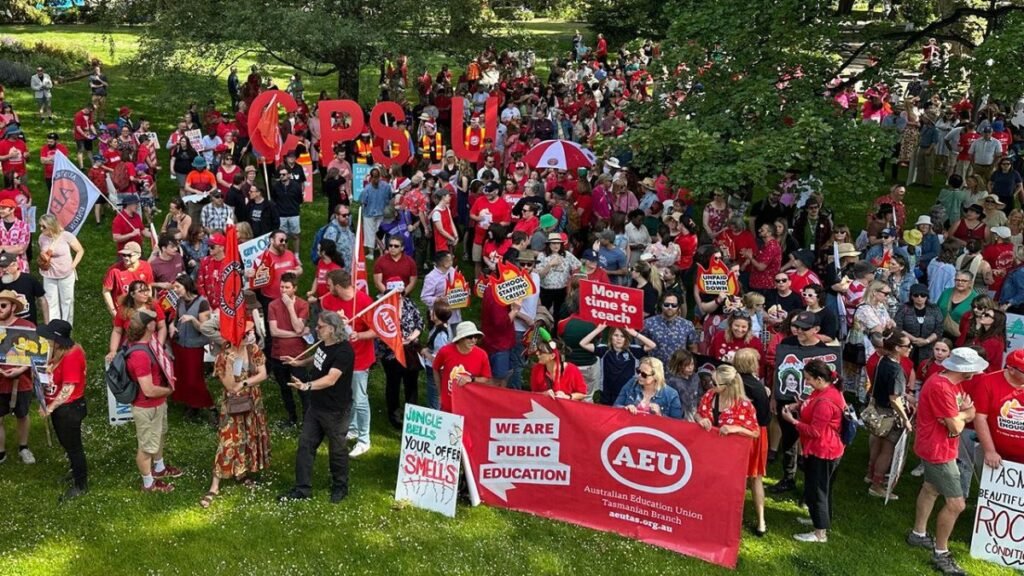
Public schools across Tasmania are set to close for a day in different regions this week as teachers move forward with planned industrial action. The closures come after the Australian Education Union (AEU) rejected the state government’s latest pay offer, triggering a series of strikes.
The closures will occur in stages:
- North-West Tasmania: Tuesday
- Northern Tasmania: Wednesday
- Southern Tasmania: Thursday
This staggered approach aims to minimize disruption while allowing teachers across the state to participate in the strike.
Union Confirms Strike Action
The AEU confirmed the strike plans more than two weeks in advance, giving families and communities time to prepare. AEU Tasmania branch president David Genford explained that early notice was intentional to avoid last-minute disruptions.
He highlighted that previous strike actions had drawn criticism when announced too late, and this time the union aimed to be more considerate of parents and students.
Despite this, the closures are expected to impact thousands of families, requiring parents to arrange alternative care or adjust work commitments.
Government Expresses Disappointment
Tasmania’s Education Minister Jo Palmer expressed strong disappointment over the union’s decision to proceed with the strike. She emphasized the broader impact on families, businesses, and, most importantly, students.
According to the minister, school closures disrupt learning continuity and place additional pressure on working parents. She stressed that every school day is important for student progress and development.
The government confirmed that public schools will remain closed during the strike days.
Details of the Pay Offer
The rejected government proposal included:
- 3% pay increase in the first year
- 3% increase in the second year
- 2.75% increase in the third year
- Additional incentives and improved working conditions
While the union acknowledged that the offer represented progress, it stated that key concerns remain unresolved.
Union Concerns Over Workforce and Conditions
One of the major sticking points for the union is language in the proposal suggesting workforce adjustments. The phrase “right-size the workforce” has raised concerns among union leaders.
David Genford strongly opposed any implication that jobs could be cut, stating that such wording creates uncertainty and undermines trust.
In addition to job security, the union is demanding:
- Clear commitments to reduce teacher workloads
- Recognition and compensation for extra duties
- Greater clarity in the proposed agreement
The union has also expressed frustration over delays in negotiations, describing the process as slow despite the urgency of the issues.
Government Defends Its Offer
The Education Minister maintains that the government’s proposal is fair and addresses key concerns raised by teachers. She pointed to several improvements included in the offer, such as:
- Increased funding for school psychologists
- Enhanced professional development opportunities
- Additional incentives and allowances
However, she criticized the union for rejecting the proposal without putting it to a vote among teachers.
Impact on Students and Education
The strike comes shortly after disruptions to NAPLAN testing in Tasmania, where teachers refused to administer exams as part of ongoing industrial action.
These repeated disruptions are raising concerns about the long-term impact on students’ education. Missed classroom time and delayed assessments may affect learning outcomes, particularly for students preparing for key academic milestones.
The closure of Tasmanian public schools highlights the growing tension between teachers and the state government over pay and working conditions. While negotiations appear to be progressing, significant disagreements remain unresolved.
As both sides continue discussions, the priority will be finding a balanced solution that supports teachers while minimizing disruption to students and families. Until then, communities across Tasmania will continue to feel the effects of this ongoing dispute.